
Zero to Smart Contract: Writing Secure Web3 Code with AI
In the Web3 ecosystem, code is law. But when that code is flawed, the consequences are disastrous. A single misplaced line of code or a logic loop in a smart contract can result in millions of dollars drained in seconds. For founders and developers, the fear of a hack is often the biggest barrier to launching a decentralized application (dApp).
Traditionally, ensuring smart contract security meant paying premium fees to specialized auditing firms and waiting weeks for a green light. Today, Zerax AI's Execution Layer is completely rewriting the security playbook by integrating pre-audited logic and deterministic AI generation into a seamless no-code environment.
The Cost of Human Error Over 80% of smart contract exploits, including devastating reentrancy attacks, are the direct result of human coding errors. Removing manual syntax typing drastically reduces the surface area for these vulnerabilities.
Why Manual Smart Contract Development is Risky
When you write smart contracts manually in Solidity or Rust, you are exposing your project to several critical vectors:
- Syntax Vulnerabilities: Simple oversights, like unprotected initialization functions or incorrect math libraries.
- Logic Flaws: Unintended edge cases where tokenomics or access controls don't behave as designed under heavy network stress.
- Audit Bottlenecks: External auditors only verify the code at a single point in time. Any subsequent updates require re-auditing, slowing down your time-to-market.
The Zerax AI Security Architecture
Zerax AI approaches Web3 security fundamentally differently. Instead of writing raw, untested code, our AI engine compiles contracts using battle-tested, pre-audited architectural templates.
1. Deterministic Code Generation
When you prompt Zerax AI to build a staking contract or an NFT marketplace, the engine doesn't guess the logic. It structures your request around standardized, secure frameworks (such as OpenZeppelin standards) to ensure industry-grade safety.
2. Isolated Execution Sandbox
Before any contract is deployed to the mainnet, Zerax AI allows you to simulate transactions within an isolated sandbox. The AI Execution Layer tests edge cases autonomously to ensure the logic holds up against malicious inputs.
3. Automated Access Control Management
One of the hardest parts of Web3 development is managing multi-sig wallets and admin permissions. Zerax AI automatically configures strict role-based access controls, ensuring that no single point of failure can compromise the system.
Security Best Practice: Even when using AI-generated, pre-audited contracts, always deploy your initial build on a testnet (like Sepolia). Let the Zerax AI Execution layer run automated stress tests before taking your project live on the Ethereum or BNB mainnet.
Security Comparison Breakdown
| Security Feature | Manual Development | Zerax AI Platform |
|---|---|---|
| Code Foundation | Written from scratch | Built on audited templates |
| Vulnerability Risk | High (Human error) | Minimized (Deterministic) |
| Audit Requirement | External (High Cost & Slow) | Built-in (Instant) |
| Stress Testing | Manual script writing | Automated AI simulation |
Build with Confidence, Deploy with Trust
The narrative that Web3 development must be inherently dangerous and exclusively reserved for elite cryptography engineers is over. With Zerax AI, you are not just generating code; you are inheriting a fortress of pre-audited security.
Focus on your community, your tokenomics, and your vision. Let the Zerax AI Execution Layer handle the security of your smart contracts.
Ready to explore Zerax AI?
Discover how AI-powered execution can turn ideas into working digital systems.
Latest Articles
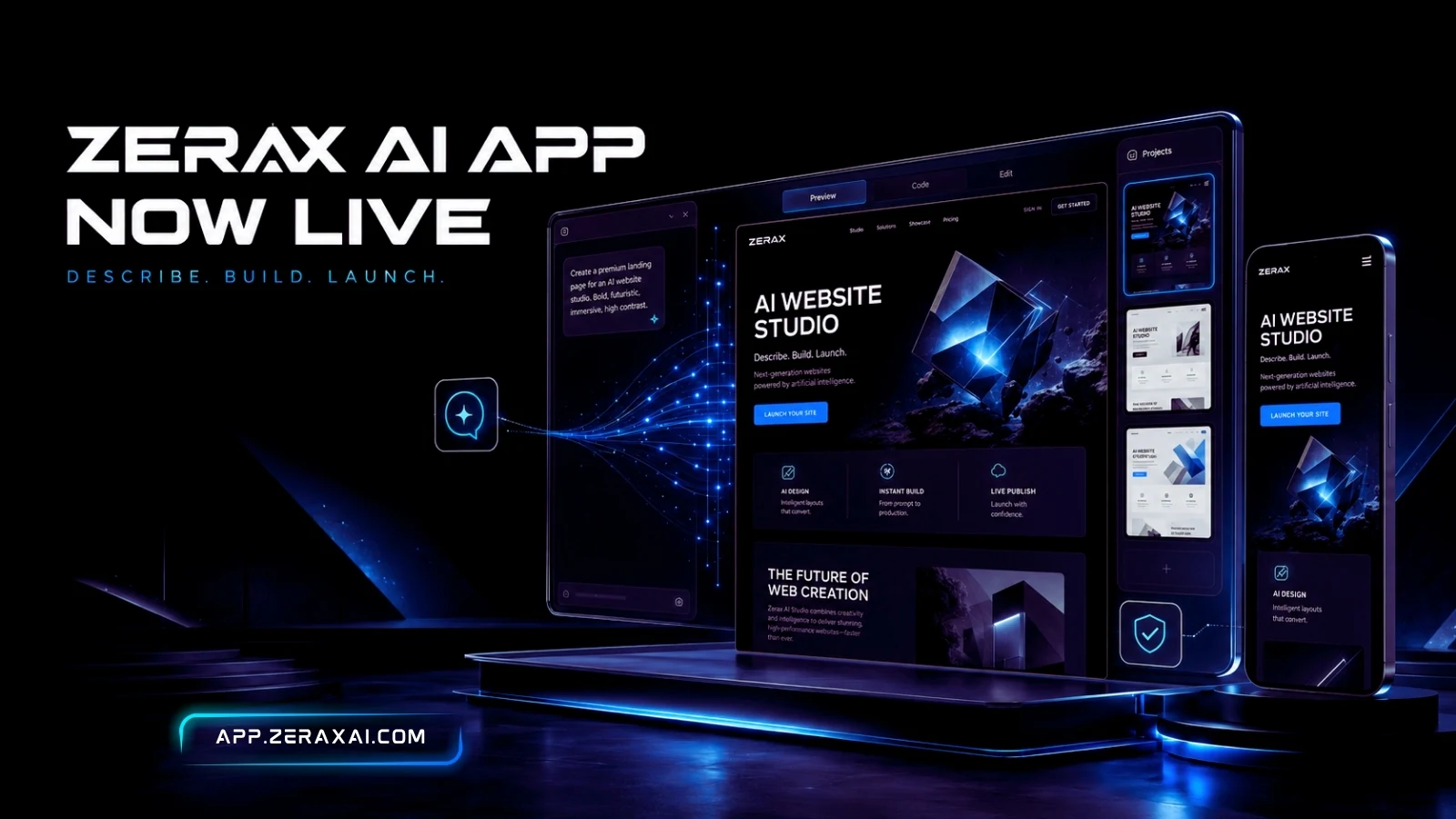
Zerax AI App Is Live: Turn Your Idea into a Professional Website with AI
Zerax AI App is now live. Turn your ideas into professional, responsive, and editable websites with our next-generation AI Website Studio.

The AI Revolution in Web3: How Artificial Intelligence is Writing the Future of Crypto
Artificial intelligence is no longer just for chatbots. Discover how AI is autonomously writing smart contracts, managing DeFi portfolios, and becoming the ultimate Web3 developer.

How to Integrate AI into Your Existing Web3 dApp (Without Coding)
Don't rebuild your entire project to catch the AI trend. Learn how to seamlessly plug autonomous AI agents and execution layers into your existing Web3 ecosystem.